Easing Huntington's Chorea Through Deep Brain Stimulation
Quick Answer: Huntington's chorea has no cure, but Deep Brain Stimulation (DBS) can dramatically calm the involuntary, dance-like movements it produces. At our Neuromodulation center in Istanbul, Prof Atilla YILMAZ MD stimulates the globus pallidus internus (GPi) to soften chorea, ease daily discomfort, and improve quality of life.
The relentless movements of Huntington's chorea wear families down. Simple acts—eating a meal, walking across a room, settling into a chair—turn into daily battles. When a disease has no cure, loved ones often feel there's nothing left to try.
Here's what matters most: Huntington's disease can't be reversed, but its most disruptive motor symptoms can be controlled. At our neuromodulation center, led by Prof Atilla YILMAZ MD, at Ataşehir Medicana International Hospital in Istanbul, Turkey, patients have found calmer days, deeper sleep, and a renewed sense of dignity.
This guide breaks down what Huntington's chorea is, why it develops, and how DBS surgery can bring real relief.
What is Huntington's chorea?
Huntington's chorea refers to the jerky, involuntary movements that stand out as a defining motor symptom of Huntington's disease. The word "chorea" traces back to the Greek term for "dance," a fitting description for the sudden, flowing, unpredictable motions patients experience.
These movements often begin subtly—a bit of restlessness or fidgeting. Over time, they spread to the face, arms, trunk, and legs. Advancing chorea interferes with balance, speech, swallowing, and nearly every routine task.
There's an important distinction to make here. Huntington's disease is the underlying genetic disorder. Huntington's chorea is one specific motor symptom of that disorder. The disease also brings cognitive and psychiatric challenges, but DBS surgery works mainly on chorea—the symptom tied most closely to physical movement.
What causes Huntington's chorea?
The root cause is a mutation in the HTT gene, marked by too many repeats of a DNA sequence known as a CAG repeat. Healthy people carry a limited number of these repeats. In Huntington's disease, the sequence repeats far too many times, creating a faulty protein called huntingtin.
This abnormal protein gradually destroys nerve cells in the basal ganglia, the part of the brain that coordinates smooth, controlled movement. As these cells break down, the brain struggles to regulate motor signals, and chorea takes hold. Huntington's disease follows an autosomal dominant inheritance pattern, so each child of an affected parent carries a 50% chance of inheriting the mutation.
Beyond chorea: other symptoms of Huntington's disease
Chorea may be the most noticeable sign, yet Huntington's disease touches both body and mind in several ways. Understanding the full picture helps families prepare for comprehensive care.
Motor symptoms:
Involuntary, dance-like movements (chorea)Trouble with coordination and balanceDifficulty with speech and swallowingMuscle stiffness or unusual postures in later stages
Cognitive symptoms:Difficulty planning, organizing, and making decisionsSlower thinking and less mental flexibilityMemory problems that worsen over time
Psychiatric symptoms:Depression and shifting moodsAnxiety and irritabilityObsessive-compulsive behaviors in some patients
DBS surgery zeroes in on motor symptoms, especially chorea. It doesn't treat cognitive or psychiatric symptoms directly, but calming the physical movements often lifts a patient's overall sense of well-being.How does DBS help with Huntington's chorea?
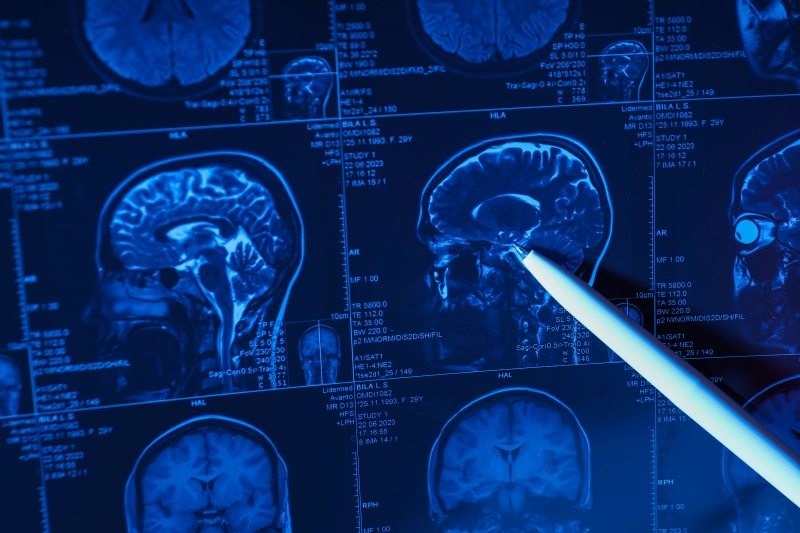
Deep Brain Stimulation is a surgical treatment in which thin electrodes are placed with great precision into targeted brain regions. These electrodes send controlled electrical pulses that quiet the overactive circuits behind abnormal movements.
For Huntington's chorea, the target is the globus pallidus internus (GPi), a key structure within the basal ganglia. Stimulating the GPi calms involuntary movements, helping patients hold steadier posture and move through everyday activities—sitting, eating, resting—with greater ease.
Deep Brain Stimulation (DBS) targeting the globus pallidus internus (GPi) has proven particularly effective in managing a range of movement symptoms in Huntington’s disease. Beyond easing chorea, GPi stimulation has shown remarkable results in addressing myoclonic and dystonic movements, which are characterized by sudden, uncontrollable muscle jerks and sustained muscle contractions causing abnormal postures, respectively. These symptoms can significantly interfere with daily tasks such as walking, maintaining balance, or even carrying out fine motor activities. By modulating the excessive neural activity within the GPi, DBS helps to restore smoother, more coordinated movements and reduce the physical discomfort associated with these symptoms.
Additionally, Huntington’s disease patients may experience challenges such as rigidity, bradykinesia (slowness of movement), and tremors, all of which can see improvement through DBS therapy. While it is not a cure for the underlying disease, GPi DBS serves as a powerful tool in enhancing mobility and providing patients with a greater degree of control over their movements, thereby improving overall quality of life.
Honest expectations matter here. DBS does not cure Huntington's disease, nor does it stop the disease from progressing. What it can do is suppress chorea, which improves comfort, safety, and quality of life. When the body is freed from constant movement, patients often sleep better, feel less exhausted, and live each day with more dignity.
Why does surgical expertise matter so much?
The outcome of DBS rests heavily on the skill of the surgical team. Reaching the GPi requires millimeter-level accuracy. A misplaced electrode can blunt the benefits or raise the risks, which makes the surgeon's experience the single most important factor in success.Prof Atilla YILMAZ MD is an internationally recognized stereotactic and functional neurosurgeon with more than 25 years of medical experience, including over 15 years devoted to neuromodulation. He has performed more than 800 successful DBS surgeries and over 1,000 neuromodulation interventions, and he has trained over 30 neurosurgical fellows. Patients from 60+ countries have traveled to him for care. Our clinical study reports an infection rate of just 1.6%—well below the 10–20% cited in medical literature—alongside an average motor improvement of 80% across movement disorder cases.
What makes Neuromodulation center different?
Neuromodulation center, based at Ataşehir Medicana International Hospital in Istanbul, Turkey, focuses solely on DBS surgery. That singular focus shapes every detail of patient care.
**A dedicated 21-member team:**Patients are supported by a full multidisciplinary team—neurosurgeons, neurologists, psychiatrists, physiotherapists, speech therapists, DBS nurses, translators, and more. From the first consultation through recovery, the team puts safety, comfort, and support first.
Precision-focused protocols:
High-resolution 3 Tesla MRI imaging under general anesthesia delivers an accurate view of the target.Careful trajectory planning maps the safest possible surgical path to reduce risk.Intraoperative electrophysiology confirms ideal electrode placement through real-time testing.
Advanced DBS technology:Medtronic Adaptive Percept (aDBS): This system reads brain activity and adjusts stimulation in real time for treatment tailored to each moment. Our center was the first center in Turkey to use it and holds the most experience with it in the country.Abbott Liberta with Neurosphere Virtual Clinic: This system enables remote programming and adjustments, so international patients receive continued care wherever they live.What does long-term care look like after DBS?
At our neuromodulation center, surgery is the start of a lifelong partnership, not the finish line. Huntington's disease keeps progressing, but DBS settings can be fine-tuned over the years to keep symptoms in check. Through the Neurosphere Virtual Clinic, patients can attend follow-up appointments remotely, no matter the distance.
Our team treats every patient and family as part of their extended family, ready to walk the road ahead together with both compassion and expertise.
Frequently Asked Questions
Can DBS cure Huntington's disease?
No. DBS cannot cure Huntington's disease or halt its progression. It can, however, substantially reduce chorea and improve daily quality of life.
Who is a good candidate for DBS?
People whose chorea seriously interferes with everyday life and who are healthy enough for surgery may be strong candidates. Each case is assessed individually.
What brain region does DBS target for Huntington's chorea?
The globus pallidus internus (GPi) is the preferred target, since stimulating it calms the circuits that drive chorea.
How safe is DBS at our Neuromodulation center ?
With an infection rate of just 1.6% and the experience of more than 800 successful DBS surgeries, our Neuromodulation center maintains a high standard of safety and success.
Why travel to Istanbul for DBS surgery?
Istanbul is a global hub for DBS. Our Neuromodulation center combines world-class technology, a highly experienced surgical team, and full support for international patients arriving from 60+ countries around the world.
Will I receive follow-up care after surgery?
Yes. our Neuromodulation center provides long-term, remote follow-up through the Neurosphere Virtual Clinic, adjusting treatment as the disease changes over time.
Take the first step toward calmer days
Huntington's chorea doesn't have to dictate every hour of every day. With Deep Brain Stimulation, those disruptive movements can be quieted, returning comfort and dignity to daily life.
Prof Atilla YILMAZ MD and the team at our Neuromodulation center are ready to offer honest, compassionate guidance. Reach out today to find out whether DBS could bring more peaceful days to you or someone you love.
 English
  French
 Russian
 Arabic
 Serbian